It sounds responsible. It sounds comforting. It sounds like something investors say when they want to pretend risk has disappeared.
But the truth is much simpler.
There are no safe havens.
Every asset carries risk. The only thing that changes is which risk you are taking.
What actually matters is the environment we are living in.
“Safe” Depends on the Environment
Take the classic safe havens investors talk about.
People think cash is safe. But the risk in cash is obvious:
Inflation.
If inflation is running at 4–5% and you’re sitting in cash earning very little, your purchasing power is slowly being eroded. Quietly. Consistently.
Cash doesn’t feel risky because the number in your account doesn’t move.
But inflation is still taking its cut.
Bonds are another asset that investors often label safe.
But bonds carry two major risks:
Inflation
Growth
When inflation rises, bond prices fall because yields need to adjust higher. When growth surprises to the upside, the same thing happens.
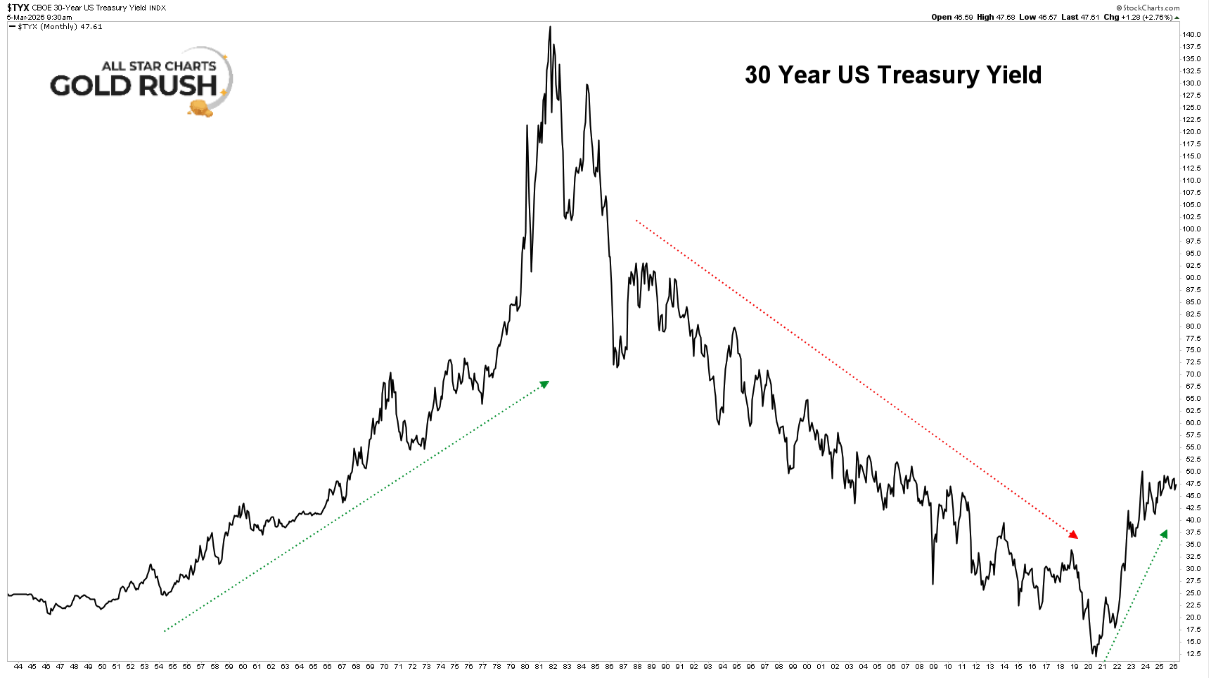
Right now the bond market is struggling with exactly that.
Long-term yields look like they may have already made their generational bottom in 2020.
Since then, yields have been pushing higher.
If inflation continues to stick around — and anyone who has been to a grocery store, a car lot, or tried to buy a house recently knows it has — bonds are going to continue facing pressure.
Gold is probably the most famous “safe haven” of all.
But even gold isn’t always safe.
Sometimes gold performs extremely well.
Other times it goes sideways for years.
Gold’s performance depends heavily on things like:
real interest rates
the strength of the dollar
global liquidity
Sometimes it protects you. Sometimes it doesn’t.
Again, it depends on the environment.
The Dollar Matters
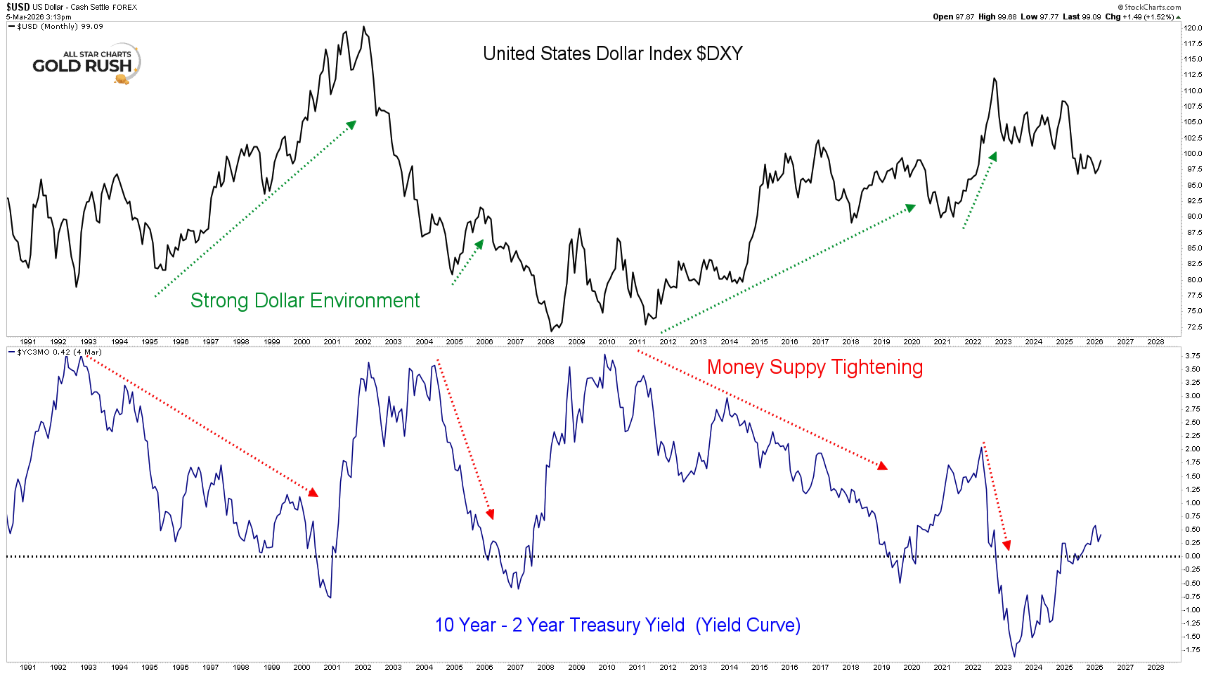
One of the most important macro relationships to watch is the U.S. dollar.
Over long cycles the dollar tends to move with monetary tightening and the shape of the yield curve.
Right now the bigger structural forces appear to be pointing toward a weaker dollar over time.
That doesn’t mean the dollar can’t bounce — it absolutely will.
Currencies move in waves.
But the broader trend looks increasingly like the strong dollar era is fading.
And when the dollar weakens, capital tends to move into things like:
commodities
international equities
metals
energy
real assets
Which is exactly what we’ve been seeing in the market.
Inflation Hides the Truth
There’s another thing most people don’t understand about inflation.
Inflation hides a lot of problems.
When inflation is high:
Revenue growth looks stronger
Earnings growth looks stronger
Asset prices rise
People feel wealthier than they actually are
Inflation can make an economy look healthier than it really is because everything is being priced higher.
But that doesn’t mean the underlying productivity or growth has improved.
Sometimes it’s just the currency losing value.
The Real Inflation Hedges
In an environment like this, the real hedges against inflation tend to be things that can rise with prices.
That’s why over the past several years we’ve seen strong performance in:
stocks
hard asset sectors
metals
energy
Most people don’t think of stocks as an inflation hedge.
But businesses can raise prices. They can grow revenues. They can adapt.
Over long periods of time, equities often do a far better job protecting purchasing power than people expect.
The same is true for real assets — things tied to energy, materials, and production.
So no, there are no safe havens.
There are only different kinds of risk.
And right now the market environment is telling us something very clearly:
Supercycle Report highlights the breakout setups, rotations, and technical signals shaping metals markets — giving traders an edge in gold, silver, and commodities.