
The $100 Trillion Trade Just Started

At 10:45am yesterday morning, JPMorgan posted tokenized securities as collateral to satisfy margin requirements at the CME.
Tokenization is here and it's about to eat the entire financial system.
One of the biggest questions in the tokenization story was whether tokenized assets would ever be accepted as real collateral.
Yesterday, JPMorgan answered that question.
But that wasn't even the first thing that happened.
Let me walk you through the day.
At 9:00am, JPMorgan converted the Invesco QQQ Trust into a tokenized asset through the DTCC. One of the most actively traded ETFs in the world. $300 billion in assets. Tokenized by the largest bank in America on live production infrastructure.
By 10:20am, BNP Paribas, the largest bank in Europe, was pledging tokenized assets as collateral to Citadel Securities. DriveWealth was exchanging tokenized assets with Vanguard. Citadel was converting traditional equities into tokenized equities. Three continents worth of financial institutions, all transacting on new rails, before most Americans had finished their morning coffee.
Then at 11:25am, Citadel pledged tokenized assets as collateral to Société Générale, which holds just shy of $2 trillion in assets. Société Générale then converted US Treasuries into tokenized Treasuries.
At 11:40am, they tokenized SPY. The S&P 500 ETF. The first ETF ever created. The most liquid fund on the planet. If you wanted to make a statement that this isn't a crypto experiment, you'd tokenize SPY. That's exactly what they did.
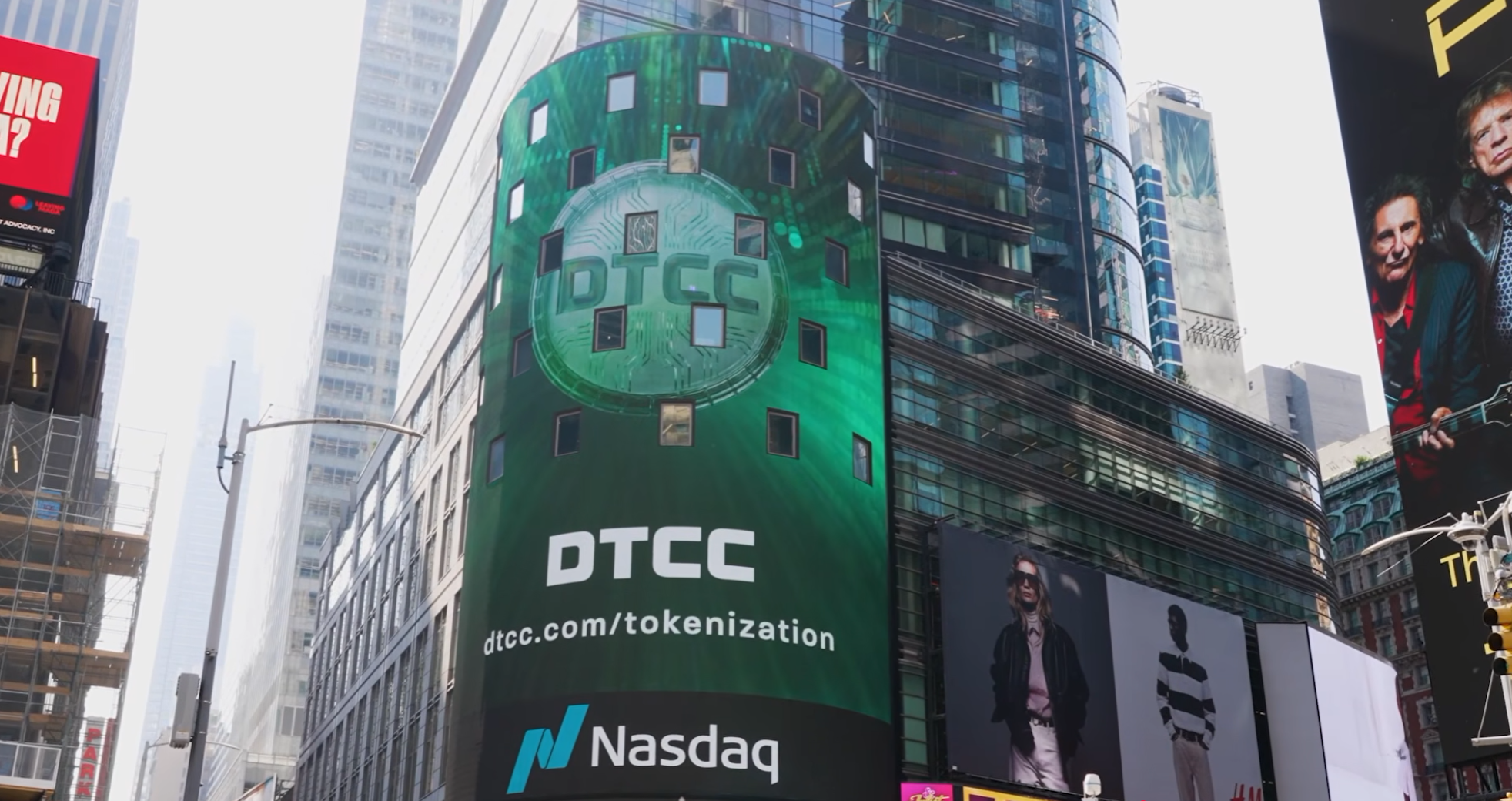
By midday it was on the screens in Times Square.
By 12:20pm, Marex was executing tokenized US Treasury repos, exchanging tokenized Treasuries, equities, and ETFs for digital cash. The securities were tokenized. The cash was digital. The settlement was atomic.
Twenty minutes later, DriveWealth moved tokenized assets between two different blockchain networks, demonstrating cross-chain interoperability in production.
By 1:15pm, the day's tokenising was done. Over 40 firms had participated. In the span of four hours, the DTCC and its participants had executed tokenized collateral pledges, Treasury repos, equity conversions, cross-chain transfers, and delivery-versus-payment settlement using digital cash.
Every single one of those use cases was theoretical six months ago.
Between now and October, this is the pilot. Banks and institutions are getting comfortable with the technology, testing workflows, moving real money in production. When October arrives and the full DTCC Tokenization Service launches, the volume explodes. But every day between now and then, dozens of institutions will be doing exactly what they did yesterday -- testing, moving money, and pledging collateral all on new tokenized infrastructure.
And here's where the story gets even juicier.
I read the 39-page SEC no-action letter back in December and there was something missing from the document. The no-action letter does not require brokers to get individual client consent before converting securities holdings to tokenized form. Issuer consent isn't required either. Apple doesn't get a vote on whether its shares are tokenized. Neither do you.
The tokenized entitlement carries the same CUSIP, the same ownership rights, the same investor protections, and the same regulatory framework as the traditional version. In the eyes of the SEC, it is the same thing just recorded on a different ledger.
What this means is that over time, your broker will convert your holdings from traditional entitlements to tokenized entitlements. Your brokerage account will look exactly the same. Your statements won't change, nobody will call you, and nobody will ask your permission. It will just happen.
The same thing will happen to your dollars in the coming years.
You'll wake up one day and recognize that the dollars you hold in your bank account are actually just U.S. government debt because you don't hold the dollars you used to, you'll hold this new form of digital dollar.
I've been telling you this was coming since December and now it's here.