For years, investors have been conditioned to think about commodities through the lens of traditional demand. Housing needs copper. Cars need steel. Data centers need electricity. That’s all true.
But we’re entering a new era where an entirely different source of demand is beginning to emerge: space.
For decades, space exploration was little more than a government funded science project. Today, it is rapidly becoming an industry. Private companies are launching satellites, building reusable rockets, planning lunar infrastructure, and openly discussing asteroid mining. Whether you think those ambitions are five years away or fifty years away is irrelevant. Markets discount the future long before it arrives.
That’s why I keep coming back to commodities.
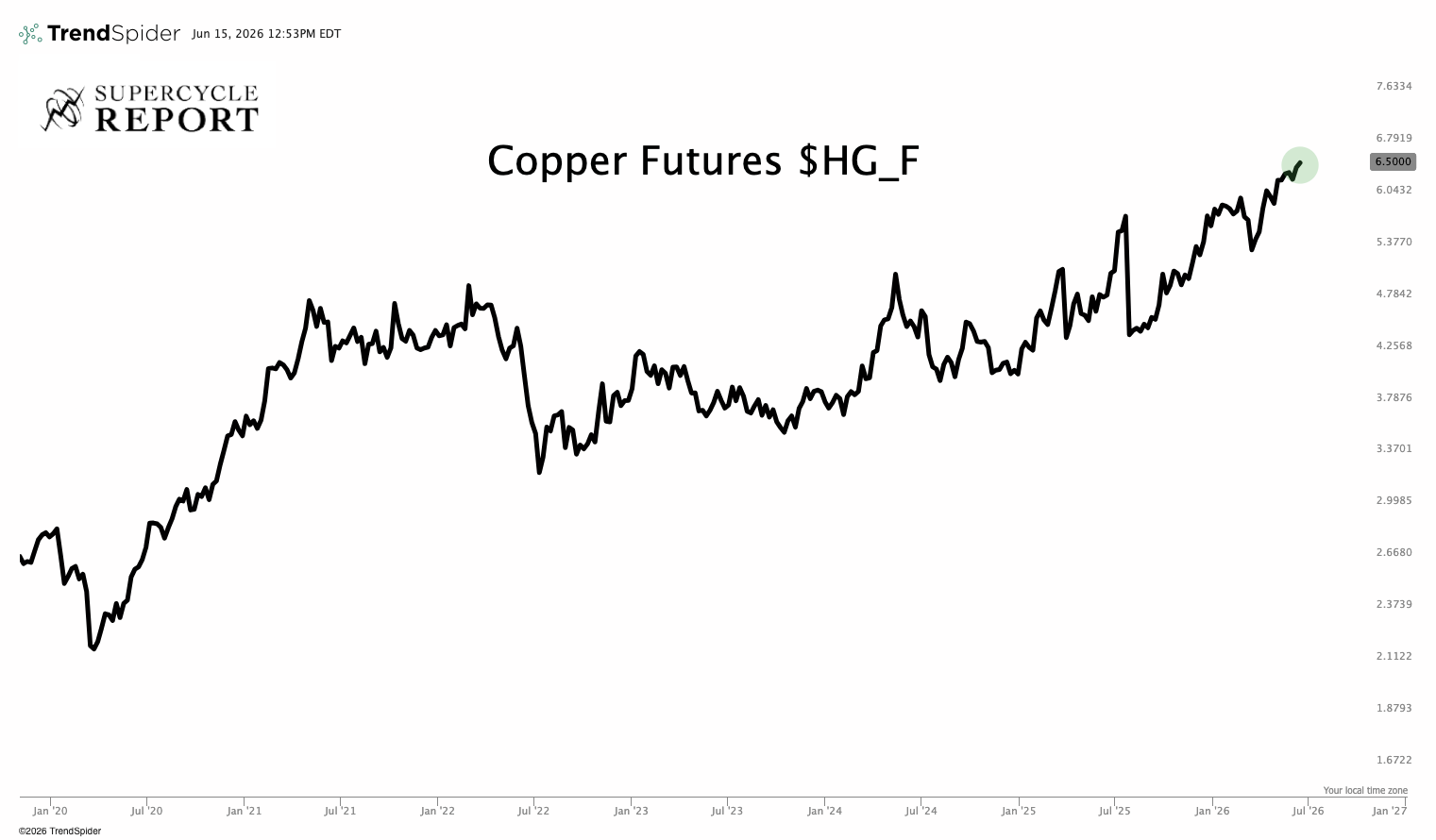
The first chart below is copper, and it continues to trend higher over time.
Copper isn’t just an electrification story anymore. It is the metal of infrastructure. Every satellite, launch facility, solar array, robotic system, power transmission network, and future space habitat requires enormous amounts of copper. Before we can mine resources in space, we first need to build the infrastructure that gets us there.
In other words, a space economy is bullish for copper long before the first asteroid is ever mined.
The market appears to understand this. Copper continues to trend higher as demand expectations expand beyond traditional construction and manufacturing. Price is confirming what the headlines are only beginning to discuss.
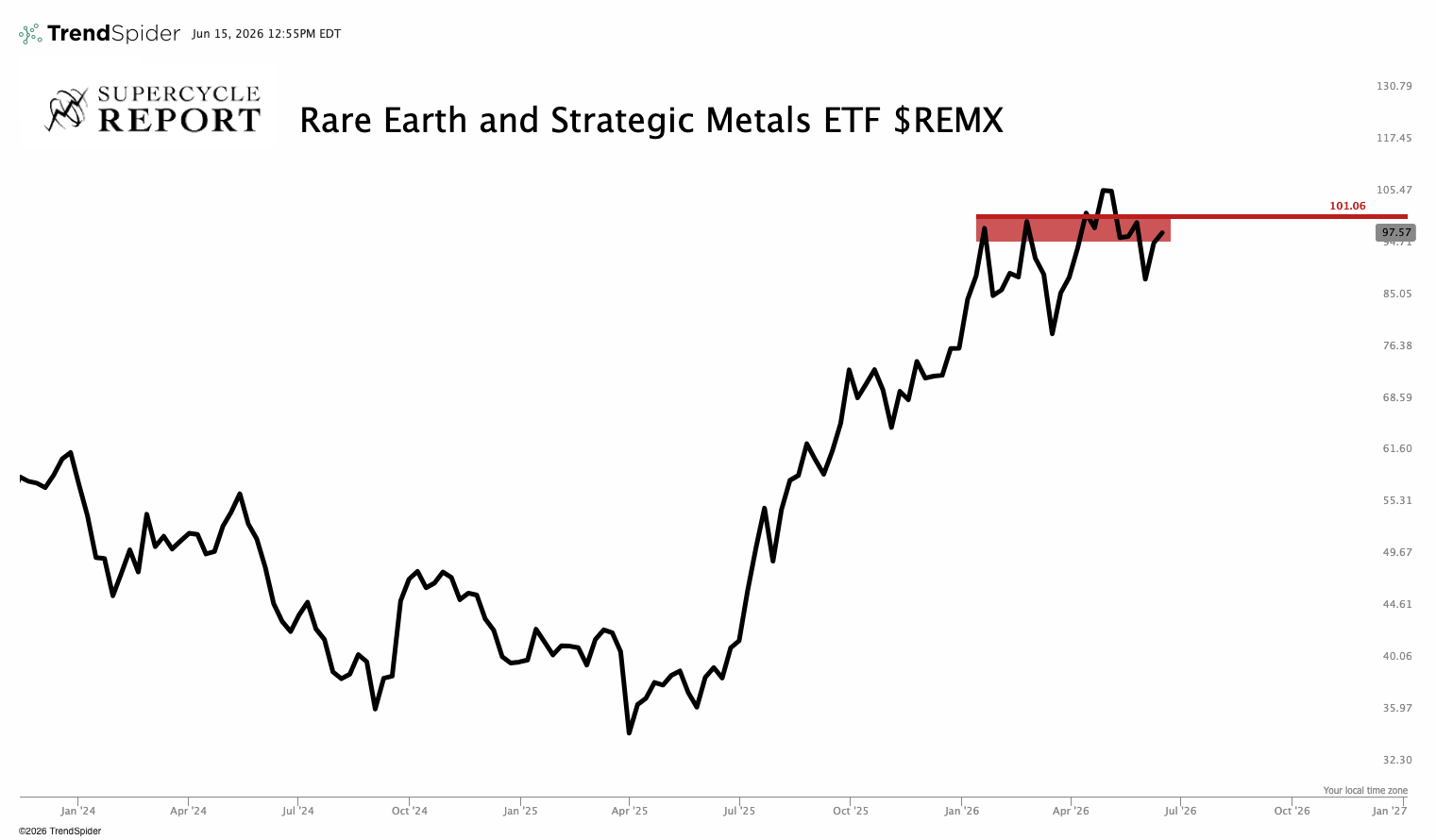
The second chart is one I’ve highlighted repeatedly: Rare Earth and Strategic Metals ETF ($REMX).
Notice how it continues to consolidate just beneath major resistance near the 2022 highs.
This chart matters because many of the metals that make modern technology possible are concentrated in this basket. Rare earth elements such as neodymium, praseodymium, dysprosium, and terbium are critical for advanced magnets, electric motors, robotics, satellites, defense systems, and future aerospace applications.
If copper is the wiring of the future, rare earths are the nervous system.
And here’s the interesting part.
When most people think about space mining, they imagine gold, silver, or platinum-rich asteroids floating through space waiting to be harvested. Those metals may eventually become important. But the first winners will likely be the companies producing the materials needed to build the infrastructure that makes space mining possible in the first place.
Before humanity mines an asteroid, it must build rockets.
Before it builds rockets, it needs metals.
Lots of metals.
The commodity supercycle has never been about one trade. It has always been about identifying where the next wave of demand is likely to emerge before everyone else sees it.
Today, we have artificial intelligence driving power demand, electrification driving copper demand, energy security driving resource investment, and now the early foundations of a space economy beginning to take shape.
The common denominator in all of these themes is the same.
Commodities.
The future may be in the stars, but the path to get there still runs through copper mines, rare earth deposits, energy infrastructure, and strategic metals. That’s why these charts matter.
And that’s why we’re paying attention.
Follow the trends. Manage the risk. Let price do the talking.
If you want to navigate this commodity supercycle with confidence, come join the professionals who understand how these environments work. Inside
At the Supercycle Report, we break down the biggest macro trends, commodity setups, energy trades, precious metals, agribusiness, global equities, and the exact positions we are taking in real time.
Supercycle Report highlights the breakout setups, rotations, and technical signals shaping metals markets — giving traders an edge in gold, silver, and commodities.